
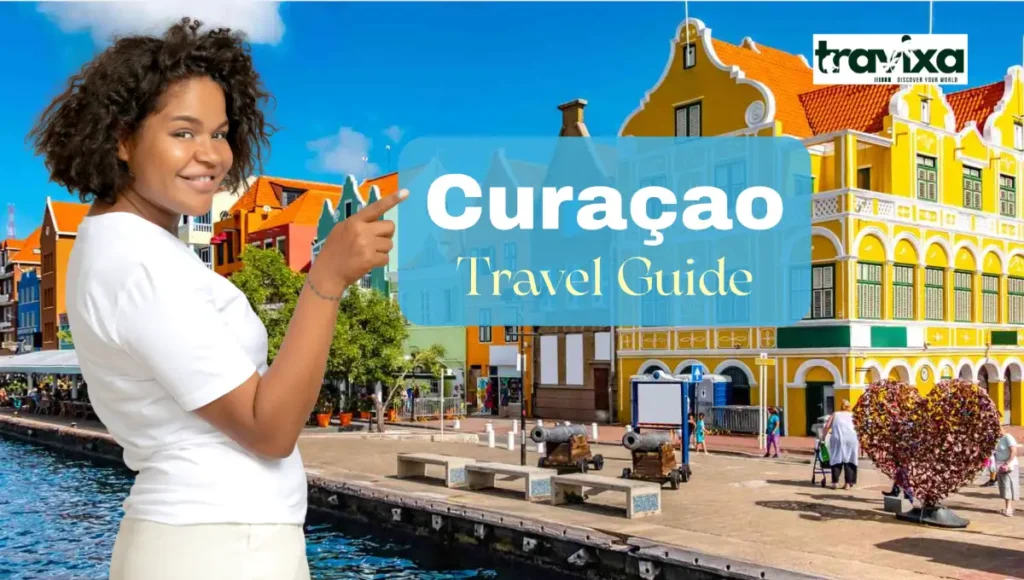

Curacao is the kind of Caribbean destination that gives you more than just beautiful beaches. The island has clear blue water, colorful streets, historic buildings, interesting local culture, good food, art, and a history that has shaped almost every part of life here.
If you are searching for where is Curaçao island, you will find it in the southern Caribbean, not far from the coast of Venezuela. It is one of the three famous ABC islands, together with Aruba and Bonaire. But despite being close to its island neighbors, Curaçao has its own personality and a culture that feels very different.
The island of Curaçao is especially interesting for travelers who want to combine a relaxing Caribbean holiday with sightseeing. You can spend the morning walking through a historic city, visit an old plantation in the afternoon, and finish the day beside turquoise water.
In this first part of our Curaçao travel guide, we will look at the island’s location, history, Willemstad, cultural heritage, colorful architecture, and some of the places that help explain what makes Curaçao island so special.
Where Is Curaçao Island?
So, where is Curaçao island exactly?
Curaçao is located in the southern Caribbean Sea, close to the northern coast of Venezuela. It belongs geographically to the Leeward Islands and forms part of the ABC island group:
- Aruba
- Bonaire
- Curaçao
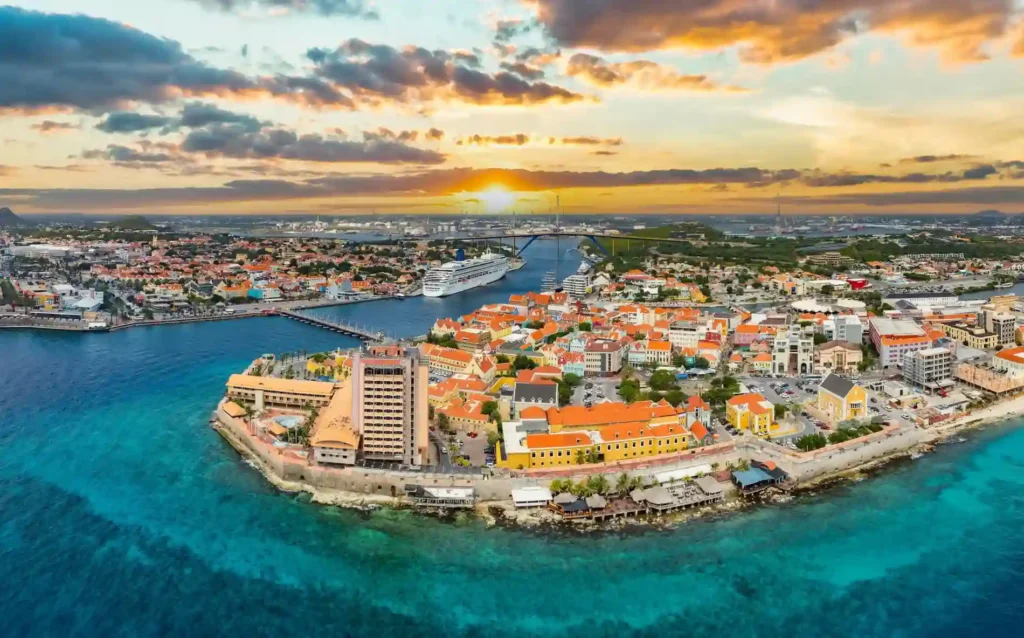
The island is relatively dry compared with many other Caribbean destinations. Its landscape is a mix of rocky coastline, small bays, dry vegetation, cactus-covered areas, and sandy beaches.
Curaçao is also politically connected to the Kingdom of the Netherlands. The island has its own government and internal affairs, while the Kingdom of the Netherlands handles certain areas such as defense and foreign relations.
Dutch influence is easy to notice, especially in Willemstad. At the same time, Curaçao has developed a strong local identity that combines Caribbean, European, African, Latin American, and Jewish influences.
Curaçao at a Glance
| Detail | Information |
|---|---|
| Location | Southern Caribbean Sea |
| Island group | ABC Islands |
| Capital | Willemstad |
| Main local language | Papiamentu |
| Other commonly used languages | Dutch, English and Spanish |
| Political connection | Kingdom of the Netherlands |
| Famous for | Beaches, Willemstad, colorful architecture, diving, culture and Curaçao liqueur |
| Currency | Caribbean guilder |
| Climate | Warm and relatively dry Caribbean climate |
One small spelling point is worth mentioning. You may see the destination written as Curaçao, Curacao, or even curaco in searches. The correct name is Curaçao, with the cedilla under the “ç”. However, Curacao without the accent is also commonly used online.
Read More Also – How to Plan an Incredible Utah National Parks Road Trip
What Is Curaçao Known For?
If you are wondering what is Curaçao known for, there is no single answer.
The island is probably most famous for the colorful historic buildings of Willemstad, its beautiful coves and beaches, excellent snorkeling and diving, and the blue-colored liqueur that carries its name.
But there is more to it than that.
Curaçao is also known for its multicultural society and Papiamentu language. Its history includes Spanish and Dutch colonial periods, the transatlantic slave trade, Jewish settlement, and the development of the oil industry.
The island’s capital, Willemstad, is another major reason people visit. Its historic center is recognized by UNESCO as a World Heritage Site, and the bright buildings along the waterfront have become one of the most recognizable views in the Caribbean.
That combination of history, architecture, beaches and culture is what makes the Caribbean island of Curaçao different from a destination that is focused only on resorts.
A Short History of the Island of Curaçao
Long before European powers arrived, Curaçao was inhabited by Indigenous people, including communities associated with the Arawak peoples.
Spanish explorer Alonso de Ojeda reached the island in 1499. Spain claimed Curaçao, but the island did not initially offer the kind of mineral wealth or agricultural conditions that attracted major Spanish investment.
The situation changed in the 17th century.
In 1634, the Dutch West India Company took control of Curaçao. The island’s location made it useful as a strategic Caribbean base, and Willemstad gradually developed around its protected harbor.
Agriculture and trade expanded, but this period also brought one of the darkest chapters in the history of Curaçao. Enslaved Africans were brought to the island, and Curaçao became an important center in the regional slave trade.
The history of the island cannot be understood without acknowledging this part of its past. Many historic plantations and buildings that visitors see today are connected to this period.
The Jewish Community of Curaçao
Curaçao also became home to a significant Sephardic Jewish community.
Jewish settlers arrived from the Netherlands and Portuguese-Jewish communities in Brazil during the 17th century. Their presence became an important part of the island’s economic and cultural development.
The Mikvé Israel-Emanuel Synagogue in Willemstad is one of the most important reminders of this history. The congregation dates back to the 1650s, making it an important part of Jewish history in the Americas.
This is one of the reasons a trip around the Curaçao island can feel surprisingly varied. You are not simply seeing Caribbean scenery; you are also seeing traces of several different cultures that have lived and worked here over centuries.
Read More Also – Things to Do in Madrid: A Complete Guide
Curaçao and the Fight Against Slavery
The history of Curaçao also includes resistance by enslaved people.
One of the best-known figures is Tula, who led a major slave revolt in 1795. The uprising began at the Knip plantation and grew as more enslaved people joined the movement.
The revolt was eventually defeated, and Tula was executed in October 1795. Slavery itself continued on Curaçao until its abolition in 1863.
Today, Tula is remembered as an important symbol of resistance and the struggle for freedom.
Visitors interested in this history can explore places connected with the revolt and the island’s history of slavery. Museums and historic plantation sites provide a different perspective on Curaçao beyond the beaches and colorful streets.
This part of the island’s story is important because the beautiful architecture and plantation houses should not be viewed only as attractive tourist sights. They are also reminders of a difficult and painful period in Caribbean history.
From Plantations to the Oil Industry
For centuries, agriculture, salt production and trade played important roles in the local economy.
Curaçao’s dry climate made large-scale farming difficult, but plantations were still established across the island. Crops included aloe, sugar cane and indigo, while salt was also an important product.
Later, the arrival of the oil industry changed Curaçao’s economy dramatically.
A major oil refinery was built in the early 20th century, and the island became an important center for oil processing because of its location close to Venezuela.
The refinery brought employment and economic growth. Later, changing conditions in the oil industry affected the island, and tourism became increasingly important to Curaçao’s economy.
Today, visitors are a major part of island life, but the older industries and their history are still visible in different parts of Curaçao.
Willemstad: The Colorful Heart of Curaçao
If there is one place you should understand before visiting Curaçao, it is Willemstad.
Willemstad is the capital and the cultural heart of the island. The city sits around St. Anna Bay and the natural harbor of Schottegat.
The historic center is divided mainly between Punda and Otrobanda, with the famous Queen Emma Bridge connecting the two sides.
Walking around Willemstad is one of the easiest ways to experience the character of the Caribbean island Curaçao.
You will see Dutch-style buildings painted in bright colors, old forts, small streets, cafés, restaurants, shops, galleries and murals.
Read More Also – Things to Do in Vancouver: A Complete Guide for First-Time Visitors
Punda: The Historic Side
Punda is the older part of Willemstad and dates back to the 17th century.
The area grew around Fort Amsterdam, which was established after the Dutch took control of the island. The fort played an important military and administrative role and still stands as one of the city’s historic landmarks.
One of the most famous areas in Punda is the waterfront known as the Handelskade.
The row of colorful Dutch colonial buildings beside the water has become one of Curaçao’s most recognizable views. The buildings are painted in different bright colors, creating the postcard image that many travelers associate with the island.
The exact story behind the colorful facades has been told in different ways over the years, but whatever the reason, the colors have become an important part of Willemstad’s identity.
Queen Emma Bridge
The Queen Emma Bridge is another landmark you will probably notice while exploring Willemstad.
Unlike a normal bridge, this floating pontoon bridge can swing open when ships need to enter or leave St. Anna Bay.
It has been connecting Punda and Otrobanda for more than a century and is often called the “Swinging Old Lady.”
When the bridge opens, pedestrians can use a small ferry to cross the water.
It is one of those simple experiences that makes walking around Willemstad more memorable. You may be crossing the bridge one minute and suddenly find yourself waiting while a large ship passes through the channel.
Otrobanda: The Other Side
Across the water from Punda is Otrobanda, whose name means “the other side” in Papiamentu.
Historically, Otrobanda developed later than Punda and was associated more with residential and working-class communities.
Today, the neighborhood has a mixture of old buildings, residential streets, colorful murals, restaurants, hotels and renovated spaces.
The area has also developed a strong artistic character. Street art projects have brought new attention to parts of Otrobanda, especially around the streets near the waterfront and Brión Square.
For travelers who enjoy photography, architecture and local art, Otrobanda is worth exploring instead of simply crossing over and returning to Punda.
Why Willemstad Is a UNESCO World Heritage Site
Willemstad’s historic center, including its old buildings, fortifications and harbor area, was added to the UNESCO World Heritage List in 1997.
The importance of Willemstad comes from its historic architecture and the way the city developed around its natural harbor.
The city reflects several centuries of European colonial history while also showing the influence of the Caribbean communities that made the island their home.
That is why a walk through Willemstad can feel very different from a typical resort holiday.
You can stop for a coffee, photograph the waterfront, visit a historic building, look at local artwork and then walk only a few minutes before reaching the water.
Curaçao’s Colorful Architecture and Street Art
One of the first things you may notice on the Curaçao island is color.
The bright buildings around Willemstad are only part of the story. In recent years, street art has added another layer of color to the city.
Murals appear on walls, empty buildings and side streets, especially around Otrobanda and Punda.
Some artworks celebrate Caribbean culture, local plants and everyday life. Others discuss more serious subjects such as poverty, racism, environmental problems and the island’s colonial history.
Kaya Kaya
The Kaya Kaya project has played an important role in the artistic development of Otrobanda.
Local artists and community members helped turn parts of the neighborhood into an open-air art space. Murals and creative installations brought attention to streets that many visitors might otherwise have missed.
The project also became connected with a local festival celebrating art, music, food and community.
If you enjoy discovering destinations on foot, this is a good reason to spend some time away from the main tourist streets.
The Plantation Houses of Curaçao
Curaçao once had many plantations, and the old plantation houses are known locally as Landhuizen.
These large houses were generally built for plantation owners and managers. Many were positioned on higher ground, allowing the owners to oversee the surrounding land.
The plantations produced crops such as sugar cane, aloe and indigo, while salt production also played a major role.
However, these beautiful historic houses are closely connected to the history of slavery. Enslaved people lived and worked on these plantations under brutal conditions.
For that reason, visiting a Landhuis is not simply about admiring old Caribbean architecture. These places also help explain how the island’s economy and society developed.
Some plantation houses have been restored and now operate as museums, restaurants, cultural spaces or other visitor attractions.
Landhuis Bloemhof
Landhuis Bloemhof is one example of a historic estate that has become a cultural destination.
The site combines history, art and nature. It is also associated with the unusual Cathedral of Thorns, an artistic structure created from thorny branches and other natural materials.
The artwork reflects the dry environment of Curaçao while exploring ideas connected with nature, history, religion and society.
It is a good example of how the island’s old spaces are sometimes used to present modern art and culture.
A Different Side of Curaçao
By this point, it should be clear why Curaçao is more than a beach destination.
Yes, the island has clear water and beautiful bays. But its identity comes from many layers: Indigenous history, Spanish and Dutch influence, African heritage, Jewish history, Caribbean traditions, local art and modern tourism.
That mix is also what makes the destination interesting for first-time visitors.
If you only stay inside a resort, you will see only one small part of the island. Exploring Willemstad, learning about its history, visiting cultural sites and seeing the old plantation areas can give you a much better understanding of what Curaçao is known for.
Read More Also – Things to See in Amsterdam
Quick Guide to Curaçao
| What to explore | Why it matters |
|---|---|
| Willemstad | Historic capital with colorful architecture |
| Punda | Old historic district and Handelskade |
| Otrobanda | Art, murals, local streets and waterfront |
| Queen Emma Bridge | Famous floating pedestrian bridge |
| Fort Amsterdam | Important historic fort in Willemstad |
| Historic Landhuizen | Connection to plantation history |
| Jewish heritage | Important part of Curaçao’s multicultural history |
| Street art | Modern local art across Willemstad |
| Beaches and coves | Clear water, swimming, snorkeling and relaxation |
| Curaçao liqueur | One of the island’s best-known products |
Final Thoughts on Curaçao
Curaçao is easy to describe as a Caribbean island, but that description does not tell the whole story.
The Curaçao island combines beaches and warm weather with a complicated history, colorful architecture, local art and a multicultural population. Willemstad alone gives visitors plenty to explore before they even start looking for the best beaches.
And this is only the first half of the guide.
In Part 2 of our Curaçao travel guide, we will move beyond Willemstad and look at the island’s beaches, snorkeling and diving, local food, Curaçao liqueur, transportation, hidden spots, practical travel tips and more things to do around the Caribbean island Curaçao.
Read More About – Curaçao Travel Guide Part 2
FAQs About Curaçao
Q1. Where is Curaçao island located?
Curaçao is in the southern Caribbean Sea, close to the northern coast of Venezuela. It is one of the three ABC islands, along with Aruba and Bonaire.
Q2. What is Curaçao known for?
Curaçao is known for its colorful capital Willemstad, clear Caribbean waters, beaches and coves, diving and snorkeling, multicultural history, local art, and the famous Curaçao liqueur.
Q3. Is Curaçao part of the Netherlands?
Curaçao is a constituent country within the Kingdom of the Netherlands. It has its own government and internal affairs, while certain responsibilities are handled at the Kingdom level.
Q4. Is Curaco the same as Curaçao?
“Curaco” is usually a misspelling of Curaçao. The correct spelling is Curaçao, although “Curacao” without the accent is also commonly used online.
Q5. Is Curaçao part of the Caribbean?
Yes. Curaçao is a Caribbean island located in the southern Caribbean Sea and forms part of the ABC island group with Aruba and Bonaire.
Q6. What language is spoken in Curaçao?
Papiamentu is one of the main local languages. Dutch, English and Spanish are also commonly spoken, making it relatively easy for international visitors to communicate.
Read More Also – Things to Do in London for First Timers