
Planning a Europe trip sounds exciting. But when you actually start planning, things become confusing very fast. There are too many countries, cities, flights, trains and hotels. Many first-time travellers dont know where to start. Because of this, people either spend too much money or waste too much time during the trip.
A good Europe trip is not about visiting 10 countries in 10 days. It is about smart planning. Choosing right places. Managing budget properly. And keeping enough time to actually enjoy the journey. Europe is huge, so trying to see everything in one trip is impossible.
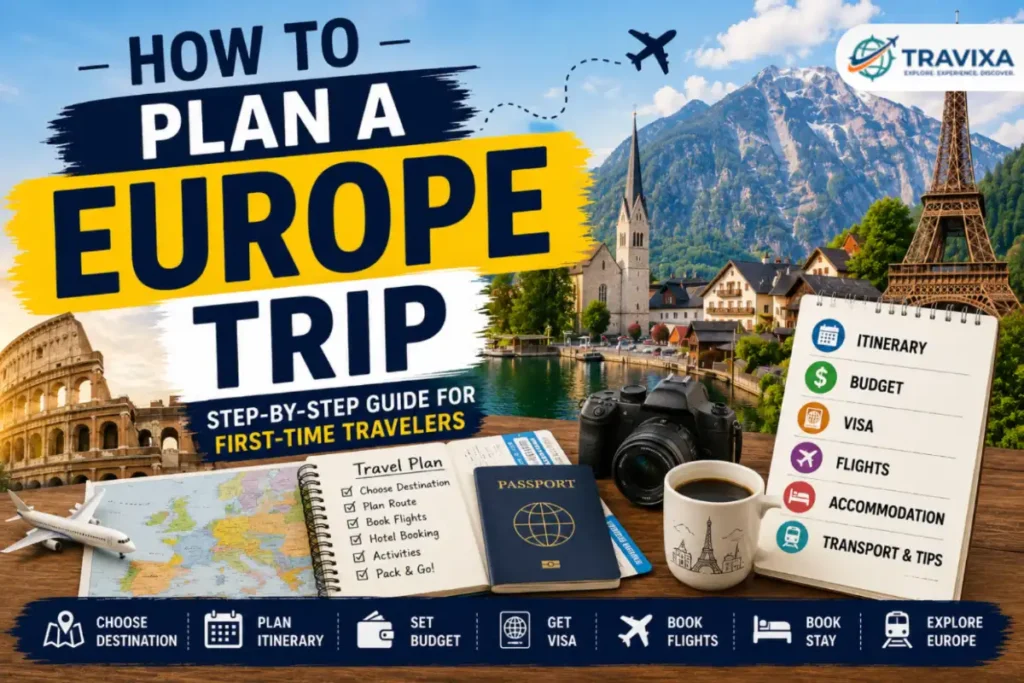
In this article, we are going to explain how to plan a Europe trip step by step. We will talk about budget, visa, routes, flights, hotels, transportation and many important travel tips. Everything is written in simple way so beginners can understand easily.
What is Europe Trip Planning?
Europe trip planning means organizing your full journey before travel. This includes choosing countries, making itinerary, booking flights and hotels, planning transportation and managing budget.
Without planning, Europe travel can become stressful. You may waste time in long travel routes or spend extra money on last-minute bookings.
A proper plan helps you save money and enjoy more places peacefully.
Step 1: Decide Your Budget First
Before choosing destinations, decide how much money you want to spend.
For most Indian travellers, a normal Europe trip costs around ₹1.5 lakh to ₹3 lakh per person for 10–14 days. Budget travellers can do it cheaper, while luxury trips cost much more.
Flights usually take biggest part of budget. Hotels, visas and transport also cost lot in Europe.
Countries like Zurich and Paris are expensive. But places like Budapest and Prague are more affordable.
So choosing destinations carefully is very important.
Step 2: Decide How Many Days You Have
This is another important step. Many people make mistake here. They try to fit too many places in very less time.
If this is your first Europe trip, then 10–14 days is enough. In this duration, you can comfortably visit 2–4 cities.
Dont plan 7 countries in 10 days. Half of your time will go in airports and trains only.
Travel slowly. Europe is best enjoyed when you have free time also.
Step 3: Choose the Right Europe Route
After budget and duration, now choose your route.
Try to select nearby countries so travel becomes easier. Europe is well connected, so you can move between cities by trains, buses or flights.
Popular Europe Routes
Classic First-Time Route
London → Paris → Rome
This is most popular route for beginners. You get history, culture and famous landmarks together.
Central Europe Route
Prague → Vienna → Budapest
This route is little cheaper and less crowded. Perfect for budget travellers.
Nature and Scenic Route
Lucerne → Interlaken → Venice
This route is great for mountains, lakes and beautiful scenery.
Step 4: Apply for Europe Visa
Indian travellers need Schengen visa for most European countries.
You should apply at least 30–45 days before your trip. Visa process takes time.
Usually visa and insurance together cost around ₹10,000–₹15,000.
You need documents like:
- Passport
- Flight tickets
- Hotel bookings
- Bank statement
- Travel insurance
- Itinerary
Apply through the country where you will spend most days.
Step 5: Book Flights Early
Flight prices change very fast. Booking late can increase your trip cost badly.
Try to book international flights around 2–3 months before travel. This usually gives best prices.
Many travellers also use open-jaw tickets. This means flying into one city and leaving from another.
Example:
Arrival: London
Departure: Rome
This saves time and avoids backtracking.
Step 6: Choose Good Accommodation
Hotels in Europe can be expensive if booked late.
Try staying near metro stations or train stations. This saves lot of travel time daily.
Budget travellers can use hostels. Couples and families usually prefer hotels or apartments.
In expensive cities, staying little outside center area can save good money.
Step 7: Plan Transportation Inside Europe
Transportation in Europe is very easy. Almost every country is connected properly.
Train Travel
Trains are most comfortable option. Specially for nearby cities.
Travel between Paris and Amsterdam or Vienna and Budapest is very smooth by train.
Many travellers use Eurail Pass for multi-country trips.
Budget Flights
For long routes, flights save lot of time.
Budget airlines are common in Europe. But always check baggage fees carefully because cheap tickets sometimes become expensive later.
Buses
Buses are cheapest option. Companies like FlixBus connect many European cities.
Good for budget travellers.
Step 8: Plan Daily Activities
Dont keep your itinerary empty till last moment.
Popular attractions in Europe often become sold out early. So booking famous places before trip is smart idea.
Places like:
- Eiffel Tower
- Colosseum
- Vatican Museums
usually have long lines.
Pre-booking saves time.
But at same time, dont overplan every hour. Leave some free time also.
Step 9: Pack Smartly
Europe trips usually include lot of walking. Streets in many old cities are made of stones and slopes.
So comfortable shoes are very important.
Carry simple clothes that can be layered easily. Weather changes quickly in Europe.
Dont overpack because moving luggage in trains and stations becomes tiring.
Step 10: Best Time to Visit Europe
Spring and autumn are best seasons for Europe travel.
April to June and September to October offer good weather and less crowds.
Summer months are crowded and expensive.
Winter is cheaper but colder. Still many people enjoy Christmas markets and snow season.
Common Mistakes to Avoid
One big mistake is rushing too much. Europe is not race.
Another mistake is choosing too many countries together. This increases transport cost and stress.
Many people also ignore travel insurance or visa timelines. That can create problems later.
Always keep backup money for emergencies.
Final Thoughts
Planning a Europe trip takes little time, but it becomes much easier once you understand basics.
Start with budget. Then choose right route and realistic itinerary. Book things early and keep enough free time in your journey.
Europe is one of the best travel destinations in the world. Beautiful cities, history, food, culture and landscapes — everything feels different there.
And remember one thing. Your first Europe trip does not need to be perfect. Even small experiences become special there 😊
Read More Also