







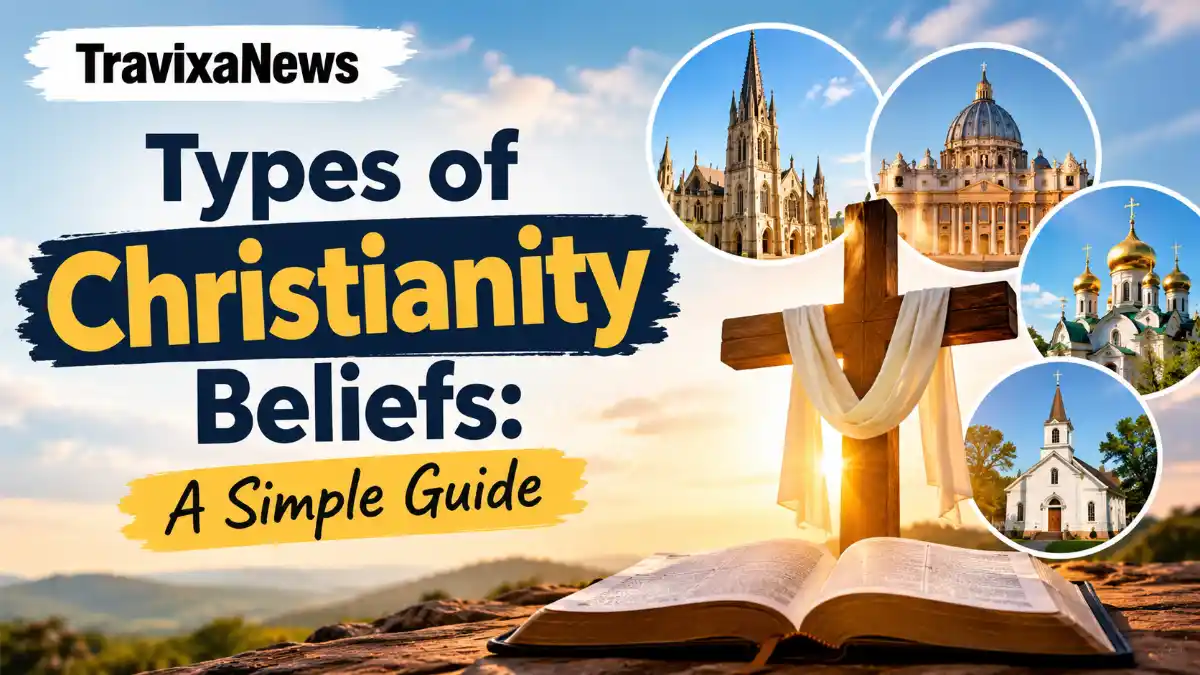
Christianity is one of the world’s largest religions, with millions of followers across different countries. However, not all Christians follow the same traditions or worship in the same way. Over time, different branches of Christianity have developed their own beliefs, practices, and ways of running churches.
Understanding the types of Christianity beliefs can help you learn more about these differences and what makes each Christian denomination unique.
What Is a Christian Denomination?
A Christian denomination is a group within Christianity that shares certain religious beliefs, traditions, and ways of worshipping. Denominations may differ in their understanding of the Bible, baptism, church leadership, and the role of religious traditions.
Although these differences exist, most Christian denominations believe in Jesus Christ and recognise his importance in human salvation.
The Three Main Branches of Christianity
Christianity is generally divided into three major branches: Roman Catholicism, Eastern Orthodoxy, and Protestantism.
1. Roman Catholicism
The Roman Catholic Church is the largest Christian church in the world. It recognises the Pope as its main spiritual leader and places importance on both the Bible and church tradition. Catholics also follow sacraments such as baptism, Holy Communion, and confession. Honouring Mary, the mother of Jesus, and other saints is another important part of Catholic tradition.
2. Eastern Orthodox Christianity
Eastern Orthodox Christians follow ancient Christian traditions and place strong importance on prayer, worship, and spiritual growth. Their churches are led by bishops rather than a single Pope. Orthodox Christians also respect church traditions, use religious icons in worship, and believe that spiritual life involves growing closer to God.
3. Protestantism
Protestantism developed during the Reformation in the 16th century, when reformers challenged certain teachings and practices of the Catholic Church. Protestant churches generally give the Bible the highest authority in matters of faith. They also emphasise salvation through God’s grace and faith in Jesus Christ.
Protestantism includes many denominations, each with its own traditions and interpretations of Christian teachings.
Major Protestant Denominations
Here are some well-known Protestant groups and their key beliefs.
Baptist
Baptists believe that baptism should follow a personal decision to accept the Christian faith. Many Baptist churches practise baptism by full immersion in water. They also value the independence of local churches, allowing individual congregations to manage their own affairs.
Methodist
Methodism began through the work of John Wesley during the 18th century. Methodist churches emphasise faith, personal spiritual growth, helping others, and social responsibility. Many Methodist communities are actively involved in charity work and supporting people in need.
Lutheran
Lutheranism is based on the teachings of Martin Luther, one of the key figures of the Protestant Reformation. Lutherans place strong importance on the Bible, God’s grace, and faith in Jesus Christ. Their worship services often include traditional prayers, hymns, and sacraments.
Presbyterian
Presbyterian churches are known for being governed by groups of elders rather than by a single central leader. Their teachings are influenced by the ideas of John Calvin and place importance on God’s authority, the Bible, and the role of the church community.
Anglican and Episcopal
Anglican churches developed from the Church of England, while the Episcopal Church is one of the main Anglican-related churches in the United States. These churches combine Protestant beliefs with many traditional forms of worship. Their services often include formal prayers, historic ceremonies, and the use of the Book of Common Prayer.
Pentecostal and Charismatic
Pentecostal Christians place special emphasis on the work of the Holy Spirit. Many believe that spiritual gifts, such as speaking in tongues, healing, and prophecy, continue to be present today. Charismatic Christians share similar beliefs, although they may belong to other Christian denominations.
Anabaptist
Anabaptist traditions include groups such as the Mennonites and Amish. These communities often emphasise adult baptism, peace, simple living, and helping others. Some groups also prefer to live separately from parts of modern society to protect their religious values.
Final Thoughts
The different types of Christianity beliefs show how one religion can include a wide range of traditions and worship styles. Roman Catholics, Eastern Orthodox Christians, and Protestants share a belief in Jesus Christ, but they differ in church leadership, religious practices, and interpretations of Scripture.
Learning about these denominations offers a clearer understanding of Christianity and the many ways people practise their faith around the world.
Read More Also – UK Security Market: Size, Growth, Cybersecurity Exports and Future Trends