
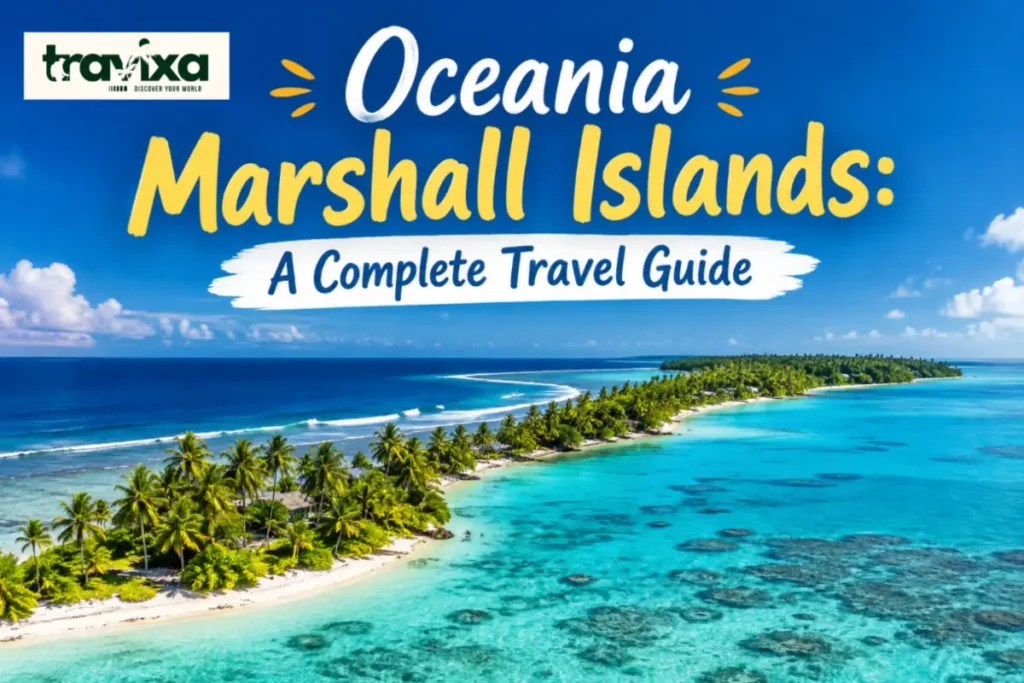

The Marshall Islands is a small island nation in Oceania, located in the central Pacific Ocean. It is a beautiful but remote destination made up of coral atolls, small islands, clear lagoons, and tropical landscapes.
Unlike busy tourist destinations, the Marshall Islands offers a quieter side of the Pacific. Visitors come here to explore marine life, enjoy diving, learn about the country’s unique history, and experience traditional island culture.
The country may be small in terms of land area, but its islands are spread across a vast part of the Pacific Ocean. From the capital city of Majuro to remote atolls with very few visitors, the Marshall Islands has a character that is quite different from other popular travel destinations.
This guide covers everything you should know about Oceania Marshall Islands, including its location, history, culture, famous places, weather, food, diving opportunities, and useful travel information.
About the Marshall Islands
The official name of the country is the Republic of the Marshall Islands. It is located in the Micronesia region of Oceania and consists mainly of coral atolls and small islands.
The country is known for its beautiful lagoons and marine environment. Coconut palms, breadfruit trees, pandanus plants, hibiscus, and other tropical vegetation can be found across many of the islands.
The Marshall Islands is made up of more than 1,000 islands and islets, although many of them are very small and some are uninhabited. These islands are divided into two main chains known as the Ratak Chain and the Ralik Chain.
Majuro is the capital and the largest urban area in the country. It is where most government offices, businesses, hotels, restaurants, and services are located.
Life outside the capital can be very different. Many outer islands remain quiet and traditional, with communities closely connected to fishing, family life, and the ocean.
Marshall Islands Quick Facts
| Category | Details |
|---|---|
| Country | Republic of the Marshall Islands |
| Region | Oceania |
| Location | Central Pacific Ocean |
| Capital | Majuro |
| Currency | United States Dollar |
| Languages | Marshallese and English |
| Main Island Groups | Ratak Chain and Ralik Chain |
| Known For | Coral atolls, diving and marine life |
| Government | Republic |
| Land Area | Around 181 sq. km |
Where Are the Marshall Islands Located?
The Marshall Islands is located in the central Pacific Ocean, north of the equator. It is part of Oceania and geographically belongs to the Micronesian region.
Because the country consists of small islands spread across the ocean, there is no single large mainland. Instead, visitors will find long chains of low-lying islands and coral atolls surrounded by the Pacific.
The location makes the Marshall Islands one of the more remote countries in the world. Reaching the country usually requires international flight connections, depending on where you are traveling from.
Its remote location is also one reason why the islands remain less crowded than many other tropical destinations.
Geography and Natural Beauty
The landscape of the Marshall Islands is very different from countries with mountains and large forests. Most of the islands are flat and sit only a few meters above sea level.
The main natural features include:
- Coral atolls
- Blue lagoons
- Sandy beaches
- Coconut trees
- Coral reefs
- Small tropical islands
An atoll is a ring-shaped coral island or group of islands surrounding a lagoon. This type of geography gives the Marshall Islands its distinctive appearance.
The lagoons are among the country’s biggest attractions. Their calm blue waters and surrounding coral formations create beautiful views both above and below the water.
The islands also support a variety of tropical plants, including coconut palms, breadfruit, pandanus, papaya, hibiscus, and plumeria.
History of the Marshall Islands
The Marshall Islands has a long history that began with the settlement of Pacific Island communities thousands of years ago.
Marshallese people developed advanced skills in fishing and ocean navigation. They were able to travel between islands using their knowledge of waves, currents, winds, and stars.
For centuries, the islands remained relatively isolated from the outside world. European explorers and traders later arrived in the Pacific region during the 18th century.
Over time, the Marshall Islands came under the influence of several foreign powers. Germany controlled the islands before World War I, followed by Japanese administration. During World War II, the islands became strategically important because of their location in the Pacific.
After the war, the United States became responsible for administering the Marshall Islands under a United Nations trust arrangement.
The country later became independent and today maintains a special relationship with the United States through the Compact of Free Association.
Marshallese Culture
Marshallese culture has always been strongly connected to the sea.
For generations, fishing and ocean travel played an important role in daily life. Traditional navigation was one of the most impressive skills developed by Marshallese communities.
Navigators learned how to understand:
- Ocean swells
- Wave patterns
- Wind direction
- Star positions
- Sea currents
Traditional stick charts were also used as navigation tools. These charts represented ocean swells and the relationship between different islands.
Family and community are important parts of Marshallese society. Visitors should respect local traditions and customs, especially when traveling to smaller islands and villages.
Although English is widely used, the Marshallese language remains an important part of the country’s cultural identity.
Majuro: The Capital of the Marshall Islands
Majuro is the capital and main population center of the Marshall Islands.
The city is located on Majuro Atoll, which has a long and narrow shape. The area includes residential communities, government buildings, shops, restaurants, hotels, and local businesses.
For most international visitors, Majuro is the first introduction to the country.
The capital is more developed than many of the outer islands, but it still has a relaxed island atmosphere.
Visitors can spend time exploring local markets, enjoying lagoon views, visiting beaches, and trying local food.
Majuro is also the best place to arrange accommodation, transportation, and diving activities.
Best Places to Visit in the Marshall Islands
The Marshall Islands is not a major mass-tourism destination, but it has several places that attract visitors interested in history, diving, and nature.
Majuro Atoll
Majuro Atoll is the country’s main travel hub. It is home to the capital and provides the best access to hotels, restaurants, and local services.
The lagoon and coastal areas offer beautiful views, while local communities give visitors an opportunity to experience modern Marshallese life.
Bikini Atoll
Bikini Atoll is perhaps the most internationally famous location in the Marshall Islands.
The United States conducted nuclear weapons tests in the area during the mid-20th century. These tests made Bikini Atoll an important historical location.
Today, the atoll is also known among experienced divers because of the shipwrecks located underwater.
Bikini Atoll has been recognized as a UNESCO World Heritage Site because of its historical importance.
Kwajalein Atoll
Kwajalein is one of the largest coral atolls in the world in terms of lagoon area.
It has played an important role in military history and remains strategically important today.
Some areas have restricted access, so travelers should check current requirements before planning a visit.
Rongelap Atoll
Rongelap is another important atoll in the country’s history.
It is known for its beautiful natural surroundings and its connection to the history of nuclear testing in the Marshall Islands.
Its remote location makes it more suitable for travelers who are interested in exploring less-developed Pacific destinations.
Diving in the Marshall Islands
Diving is one of the biggest reasons travelers visit the Marshall Islands.
The Pacific waters around the islands contain coral reefs, tropical fish, sharks, rays, and other marine species.
The country is also famous for wreck diving.
Several underwater sites are connected to World War II and later military history. Experienced divers can explore sunken ships and other historical remains.
Popular diving experiences include:
- Coral reef diving
- Lagoon diving
- Wreck diving
- Marine life exploration
- Historical underwater sites
Because some dive sites are remote or technically challenging, visitors should always use qualified diving operators.
Marine Life and Coral Reefs
The Marshall Islands has a rich marine environment.
The surrounding waters support many species of fish and other marine animals. Coral reefs are particularly important because they provide habitats for underwater life and help protect the islands from strong ocean waves.
Snorkeling can also be a great way to experience the marine environment without scuba diving.
Depending on the location, visitors may see:
- Tropical fish
- Sea turtles
- Reef sharks
- Rays
- Colorful coral
- Large schools of fish
Travelers should always avoid touching coral or disturbing marine animals.
Coral reefs are fragile ecosystems, and responsible tourism is important for their protection.
Beaches and Island Life
One of the best things about the Marshall Islands is the peaceful atmosphere.
Many beaches are not crowded with large resorts or tourist facilities. Instead, visitors can find quiet coastlines, coconut trees, and open views of the Pacific Ocean.
Island life moves at a slower pace compared to major cities.
This makes the Marshall Islands suitable for travelers who want to escape crowded tourist destinations.
However, visitors should understand that tourism infrastructure can be limited, especially outside Majuro.
Food in the Marshall Islands
Marshallese food is influenced by local ingredients and traditional Pacific Island cooking.
Seafood is an important part of the local diet because the ocean has always provided food for island communities.
Common ingredients include:
- Fish
- Tuna
- Coconut
- Breadfruit
- Rice
- Taro
- Papaya and other tropical fruits
Fresh fish is widely enjoyed, while coconut is used in different dishes and preparations.
Majuro offers more dining choices than smaller islands. Visitors may find Pacific, Asian, and American-influenced food in the capital.
Food choices can become more limited when traveling to remote islands.
Weather in the Marshall Islands
The Marshall Islands has a tropical climate, which means the weather remains warm for most of the year.
The islands experience high humidity and regular rainfall. Temperatures usually do not change dramatically between seasons.
The climate is influenced by the surrounding Pacific Ocean.
Travelers should be prepared for:
- Warm temperatures
- Humid conditions
- Rain showers
- Strong sunshine
- Changing ocean conditions
Cyclones can also affect the region, particularly during certain periods of the year.
Before traveling, always check the latest weather forecast and local travel information.
Best Time to Visit
The best time to visit depends on the activities you want to enjoy.
Travelers interested in diving and outdoor activities generally prefer periods with calmer weather and suitable ocean conditions.
However, weather patterns can vary between different islands and atolls.
Before booking your trip, check:
- Current weather forecasts
- Rainfall conditions
- Flight schedules
- Ocean conditions
- Diving availability
Since the Marshall Islands is a remote destination, transportation planning can be just as important as choosing the right season.
How to Travel Around the Marshall Islands
Travel between islands can be challenging because the country is spread across a huge area of ocean.
Transportation options may include:
- Domestic flights
- Boats
- Small aircraft
- Local transport
Schedules may not always be as frequent or predictable as in larger tourist destinations.
Weather can also affect transportation.
For this reason, travelers should keep their schedules flexible and avoid planning extremely tight connections.
Currency and Money
The official currency of the Marshall Islands is the United States Dollar.
Travelers should not expect banking facilities to be available everywhere.
ATMs and card payment options may be limited, especially on remote islands.
It is a good idea to plan your finances before leaving Majuro or other main population centers.
Internet and Communication
Internet and mobile services are available in populated areas, but connectivity may be limited compared to major cities in other countries.
Remote islands may have slower or less reliable connections.
Travelers should download important information before traveling to isolated areas.
Useful things to save offline include:
- Flight details
- Hotel information
- Travel documents
- Maps
- Emergency contacts
Is the Marshall Islands Safe for Travelers?
The Marshall Islands is generally peaceful, but visitors should still follow normal safety precautions.
Petty crime, including theft, can happen.
Basic safety advice includes:
- Keep valuables secure.
- Avoid leaving belongings unattended.
- Respect local customs.
- Follow local laws.
- Take care during water activities.
- Check weather conditions.
Water safety is particularly important because strong currents and changing ocean conditions can create risks.
Travelers should listen to local advice before swimming, snorkeling, or diving.
Current official travel guidance also notes that crime levels are relatively low, although petty theft and break-ins can occur. Medical facilities are limited, making comprehensive travel insurance especially important.
Health and Travel Preparation
Healthcare facilities in the Marshall Islands are limited compared to major developed countries.
A serious medical emergency may require evacuation to another country.
Travel insurance should ideally cover:
- Emergency medical treatment
- Medical evacuation
- Trip cancellation
- Lost luggage
- Travel delays
Travelers who use prescription medication should bring enough supplies for their entire journey.
It is also important to check vaccination and health recommendations before departure.
Travel Tips for Visiting the Marshall Islands
Here are some useful tips for first-time visitors.
Plan flights early
International flights can be limited, so booking in advance is recommended.
Keep extra time in your itinerary
Weather and transportation can affect travel between islands.
Respect local culture
Dress appropriately and behave respectfully in local communities.
Carry important supplies
Remote islands may not have access to every product or service.
Protect the environment
Avoid leaving plastic waste and never damage coral reefs.
Prepare for limited internet
Do not expect fast or reliable internet everywhere.
Buy good travel insurance
Medical emergencies can become expensive because of the country’s remote location.
Why Visit the Marshall Islands?
The Marshall Islands is not for every type of traveler.
It may not offer huge luxury resorts, busy nightlife, or large shopping areas. But it offers something much more unique.
The country is ideal for people who enjoy:
- Remote travel
- Diving
- Marine life
- Island culture
- World War II history
- Photography
- Peaceful beaches
- Adventure
The Marshall Islands gives travelers an opportunity to see a part of the Pacific that remains less commercial and less crowded.
Advantages and Challenges of Visiting
| Advantages | Challenges |
|---|---|
| Beautiful coral atolls | Remote location |
| Excellent diving | Limited flight options |
| Peaceful beaches | Expensive travel |
| Unique island culture | Limited facilities |
| Rich history | Difficult inter-island travel |
Conclusion
The Marshall Islands is one of the most interesting destinations in Oceania. Its remote location, beautiful coral atolls, clear lagoons, marine life, and complex history make it very different from mainstream tropical destinations.
Traveling here requires planning, but visitors are rewarded with peaceful beaches, unique island culture, and some remarkable diving opportunities.
Whether you are interested in Pacific history, underwater exploration, or simply discovering a quiet part of the world, the Oceania Marshall Islands offers a memorable and unusual travel experience.

Pingback: Venezuela Travel Guide: Places, Culture & Travel Tips