
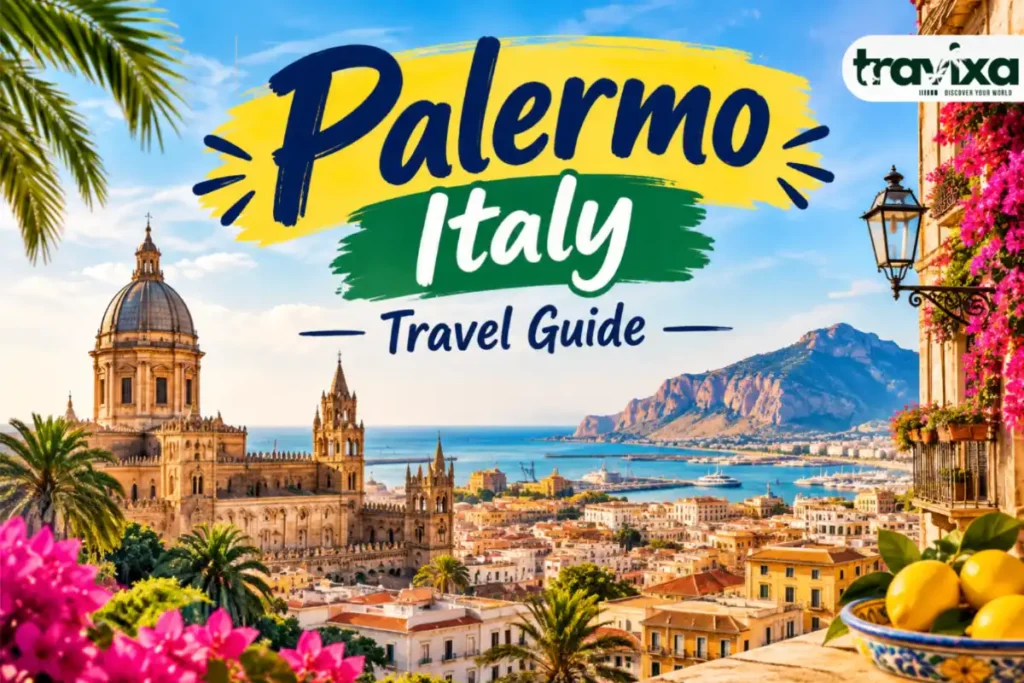

Palermo is the lively capital of Sicily, an Italian city where different cultures have left their mark over many centuries. Its streets bring together Arab, Norman, Byzantine, and Baroque influences, creating a city that can look completely different from one neighborhood to the next.
Located on the northern coast of Sicily, Palermo is a great destination for travelers who enjoy history, architecture, food, local markets, and an authentic city atmosphere. Its old streets can be noisy and busy, but that energy is part of what makes Palermo interesting.
Beyond the city, visitors can also reach beaches, hills, historic towns, and beautiful places such as Monreale and Cefalù. Since Sicily is relatively easy to explore from Palermo, the city can also work well as a base for discovering more of the island.
This Palermo Italy travel guide explores the city’s history, architecture, food, famous attractions, surrounding destinations, culture, and useful travel information.
About Palermo
Palermo has a long and fascinating history shaped by different civilizations. Arabs, Byzantines, Normans, and other rulers all influenced the city, leaving behind buildings, religious monuments, streets, and traditions that can still be seen today.
This mixture is one of Palermo’s defining features. An Arab-style dome may stand close to a Norman cathedral, while grand Baroque churches and elegant 19th-century buildings appear elsewhere in the city.
Palermo is not a perfectly polished destination. Some historic areas show signs of age, while busy streets can be crowded with motorcycles and traffic. Yet this combination of beauty, history, everyday life, and imperfections gives the city its own personality.
Palermo Quick Facts
| Category | Details |
|---|---|
| City | Palermo |
| Country | Italy |
| Region | Sicily |
| Location | Northern Sicily |
| Known For | History, architecture, markets and food |
| Population | Around 672,000 |
| Latitude | 38.124091 |
| Longitude | 13.357305 |
| Famous Nearby Places | Monreale and Cefalù |
A City Shaped by Many Cultures
One of the best ways to understand Palermo is to look at its multicultural past.
Different civilizations controlled or influenced Sicily over the centuries, and each period contributed something to the city’s identity.
The Arab period left an influence on local architecture, food, and culture. Later, the Normans created some of Palermo’s most famous monuments, combining their own traditions with influences already present on the island.
Byzantine artistic traditions can be seen in the spectacular mosaics found in several churches and historic buildings.
Later architectural styles added even more variety. Baroque churches and 19th-century theatres created a contrast with Palermo’s much older monuments.
The result is a city where history is not confined to museums. It appears naturally in streets, buildings, churches, markets, and public squares.
Best Things to See in Palermo
Palermo has plenty to explore, especially for travelers who enjoy walking through historic neighborhoods.
Palazzo dei Normanni
The Palazzo dei Normanni, or Palace of the Normans, is one of Palermo’s most important historic landmarks.
The palace is particularly famous for its beautiful mosaics and its connection to the Norman period of Sicily.
Its architecture reflects the multicultural history of the city, making it an important stop for anyone interested in Palermo’s past.
The building is one of the places where visitors can clearly see how different cultural influences came together in Sicily.
La Kalsa
La Kalsa is one of Palermo’s historic neighborhoods.
Walking through its narrow streets provides a different experience from the city’s grand monuments. Old buildings, balconies, local homes, and everyday street life create an atmosphere that feels closely connected to Palermo’s past.
It is a good area for travelers who want to explore the city on foot and see how historic Palermo blends with modern daily life.
Palermo’s Churches
Religious architecture is an important part of the city’s character.
Visitors can find churches representing several different architectural periods, including Norman and Baroque influences.
Some churches are particularly notable for their decoration and mosaics, while others are interesting because of their age and historical surroundings.
Instead of visiting only one major monument, travelers can spend several hours walking through the historic center and discovering smaller churches along the way.
Historic Catacombs
Palermo is also known for its catacombs, which offer a much darker side of the city’s history.
The catacombs are very different from Palermo’s colorful markets and sunny streets. They provide an unusual experience for visitors interested in history and traditional burial practices.
Because the atmosphere can be unsettling, they may not be suitable for every traveler.
Monreale and Its Famous Mosaics
Monreale is located close to Palermo and is one of the most popular nearby destinations.
The town is particularly famous for its cathedral and its remarkable Byzantine-style mosaics.
The detailed artwork gives visitors another opportunity to see the cultural influences that shaped Sicily.
A visit to Monreale can easily be combined with a trip to Palermo, making it a convenient addition to a Sicily itinerary.
For travelers interested in architecture and religious art, it is one of the most worthwhile places to explore near the city.
Cefalù: A Beautiful Coastal Town
Cefalù is another popular destination that can be reached from Palermo.
This charming coastal town combines historic architecture with a beautiful seaside setting.
Its old streets, traditional buildings, church, and coastal scenery make it a pleasant contrast to the busy atmosphere of Palermo.
Visitors can spend time exploring the historic center before enjoying the coastal views.
Cefalù is also a good choice for travelers who want to combine sightseeing with some time by the sea.
Beaches and Nature Around Palermo
Palermo is not only about historic buildings and city streets.
The surrounding area provides access to beaches and hilly countryside, giving travelers the opportunity to experience a different side of Sicily.
Depending on your itinerary, you can combine a city break with:
- Beach visits
- Coastal walks
- Hilltop views
- Small historic towns
- Countryside trips
- Day excursions
This variety makes Palermo a useful starting point for exploring more of northern Sicily.
Palermo’s Famous Markets
Markets are an important part of the city’s everyday character.
Palermo’s traditional markets are lively places where visitors can experience local food, sounds, and street life.
Walking through the markets gives travelers a chance to see a more informal side of the city.
You can find various local ingredients and street foods, making the markets especially interesting for food lovers.
For visitors who want to experience Palermo beyond its major monuments, spending time in a traditional market is highly recommended.
Food in Palermo
Food is one of the strongest reasons to visit Palermo.
Sicilian cuisine reflects the island’s complicated history, and Palermo’s food shows clear Mediterranean and Arab influences.
The city offers everything from simple street food to traditional sweets and seafood dishes.
Some foods and flavors worth looking for include:
- Panelle
- Almond pastries
- Lemon granita
- Fish couscous
- Calzoni
- Traditional Sicilian sweets
- Fresh seafood
Panelle
Panelle are fritters made from chickpea flour.
They are a popular example of Palermo’s street food culture and can be found in different local food spots.
They are simple, filling, and closely connected with everyday Sicilian cuisine.
Lemon Granita
Lemon granita is a refreshing choice, especially during warm weather.
Its icy texture and sharp citrus flavor make it a perfect treat when exploring Palermo on a sunny day.
Fish Couscous
Couscous may not immediately seem like a traditional Italian dish, but Sicily’s historical connections with the Mediterranean and North Africa have influenced local cuisine.
Fish couscous is one example of this cultural exchange.
Almond Pastries
Almond-based sweets are another popular part of Sicilian food culture.
They are especially enjoyable with coffee or as a small dessert during a day of sightseeing.
Palermo Street Food
Street food is an important part of the Palermo experience.
Instead of sitting down for every meal, visitors can try small local foods while walking through different parts of the city.
Street stalls and casual food shops offer opportunities to taste traditional recipes without spending a lot of time in a restaurant.
For food-focused travelers, exploring Palermo through its street food can be as interesting as visiting its monuments.
Palermo’s Nightlife
Palermo has a lively evening atmosphere.
Historic squares and old parts of the city become active after sunset, with locals and visitors gathering in restaurants, bars, and public spaces.
The city’s nightlife is closely connected to its streets and piazzas rather than being limited to large entertainment venues.
During an evening walk, travelers can experience the contrast between Palermo’s old architecture and its modern social life.
The Mafia and Palermo’s History
The history of Palermo and Sicily has also been strongly associated with the Mafia, particularly Cosa Nostra.
The subject has been portrayed extensively in films and popular culture, sometimes making it difficult for outsiders to separate Sicily’s real history from its fictional image.
Organized crime has been a serious part of Sicily’s modern history, and issues such as corruption have also affected the region.
However, this is only one part of Palermo’s story.
Today, the city is better represented by its historic monuments, cultural traditions, food, markets, architecture, and vibrant streets.
Visitors should not reduce Palermo to its Mafia history. The city has a much broader cultural identity.
Palermo’s Architecture
Architecture is one of the most rewarding parts of exploring Palermo.
The city does not follow one single architectural style. Instead, different periods appear side by side.
Travelers can encounter:
- Norman architecture
- Byzantine mosaics
- Arab influences
- Baroque churches
- 19th-century buildings
- Historic residential areas
This variety means that even an ordinary walk can become a sightseeing experience.
A building that looks simple from outside may contain centuries of history.
Getting Around Palermo
The historic parts of Palermo are best explored on foot.
Walking allows visitors to take their time and discover smaller streets, churches, markets, cafés, and public squares.
For longer distances, travelers can use local transportation or taxis.
If you plan to explore places outside the city, renting a car or arranging organized transportation may be useful, depending on your itinerary.
Traffic in central Palermo can be busy, so travelers who are not comfortable driving in crowded streets may prefer public transportation or guided trips.
Using Palermo as a Base for Sicily
One of Palermo’s biggest advantages is its location.
Travelers can use the city as a base for visiting other parts of Sicily.
Monreale and Cefalù are two obvious nearby choices, but longer journeys are also possible.
Sicily is not an enormous island, and its length can be crossed within several hours by road under normal conditions.
This makes Palermo useful for travelers who want to combine city sightseeing with wider island exploration.
A longer Sicily trip could include:
- Palermo
- Monreale
- Cefalù
- Coastal destinations
- Smaller historic towns
- Other parts of Sicily
Best Time to Visit Palermo
Palermo has a Mediterranean climate, making it an attractive destination for much of the year.
The warmer months are popular with travelers who want to enjoy beaches and outdoor sightseeing.
Spring and autumn can be particularly pleasant for walking around historic areas because temperatures are generally more comfortable than during the hottest part of summer.
Summer is a good option for travelers who enjoy warm weather and coastal activities, but popular areas can become busy.
Simple Seasonal Guide
| Season | What to Expect |
|---|---|
| Spring | Pleasant for sightseeing and walking |
| Summer | Hot, sunny and busy |
| Autumn | Comfortable weather and fewer crowds |
| Winter | Cooler and generally quieter |
Where to Stay in Palermo
Choosing where to stay depends on what type of experience you want.
The historic center is a good choice for travelers who want to be close to monuments, markets, churches, restaurants, and nightlife.
Other residential parts of the city can offer a quieter atmosphere.
When choosing accommodation, consider:
- Distance from major attractions
- Public transportation
- Restaurants nearby
- Evening atmosphere
- Parking, if driving
- Access to day-trip transport
For a first visit, staying reasonably close to the historic center can make sightseeing easier.
Palermo Travel Tips
A few simple tips can make your trip more enjoyable.
Explore on foot
Some of the city’s best experiences come from simply walking through its historic streets.
Try local food
Do not limit yourself to familiar Italian dishes. Palermo’s local specialties are an important part of the experience.
Visit beyond the main monuments
Markets, small streets, churches, and neighborhoods can be just as interesting as famous landmarks.
Keep your belongings secure
As in any busy European city, take normal precautions in crowded streets and markets.
Plan day trips
If you have extra time, consider visiting Monreale or Cefalù.
Allow time to slow down
Palermo is a city to experience rather than simply check off a list of attractions.
Why Visit Palermo, Italy?
Palermo is a destination for travelers who want history, culture, food, architecture, and an energetic city atmosphere in one place.
Its greatest attraction is not just one landmark. It is the combination of many different experiences.
You can spend the morning looking at centuries-old mosaics, have lunch from a street stall, walk through an old neighborhood in the afternoon, and finish the day in a lively piazza.
The nearby beaches, countryside, Monreale, and Cefalù add even more variety to a trip.
Palermo Travel Highlights
| Experience | Why It Is Worth Exploring |
|---|---|
| Palazzo dei Normanni | Important Norman-era landmark |
| La Kalsa | Historic neighborhood and local atmosphere |
| Traditional Markets | Street food and everyday Palermo |
| Catacombs | Unusual historical experience |
| Monreale | Famous cathedral and mosaics |
| Cefalù | Historic coastal town |
| Local Cuisine | Strong Mediterranean and Arab influences |
| Beaches | Easy coastal escape from the city |