






When you contact your bank for help with an account, loan, investment or other banking service, you may sometimes speak to a person assigned to manage your banking needs. This person is known as a Relationship Manager (RM).
An RM helps customers understand banking services, solve account-related problems and find financial products that match their needs. Many banks in India provide Relationship Managers to priority banking customers, high-net-worth individuals and business clients.
But what exactly does RM mean in banking? What does an RM do, and how can you get one?
In this article, we will explain the RM full form in bank, its meaning, responsibilities, benefits and other important details in simple English.
What Is the RM Full Form in Bank?
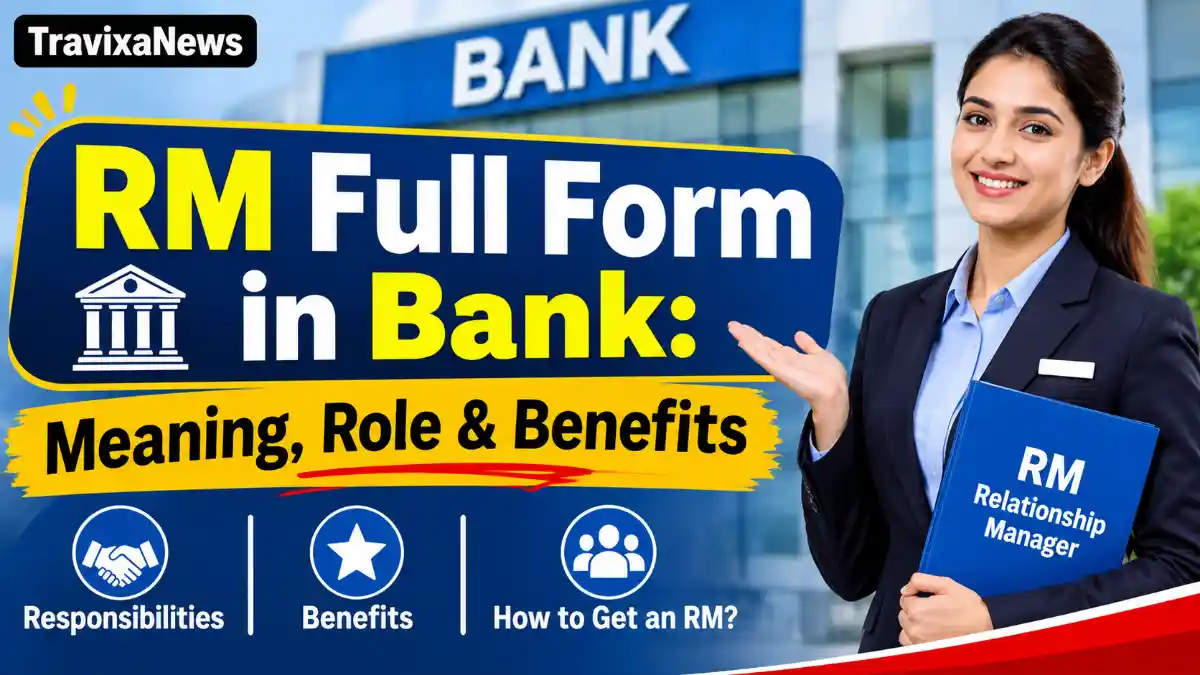
The full form of RM in banking is Relationship Manager.
A Relationship Manager is a bank employee who handles the banking relationship of assigned customers. The RM acts as a main point of contact and helps customers with different banking requirements.
For example, if you have questions about a fixed deposit, need help with a loan application or want to understand an investment option, your RM can guide you and connect you with the right department.
An RM may also contact customers to share updates about new banking services, account facilities and financial products.
RM Full Form in Banking: Overview
Here are some basic details about the Relationship Manager role in banking.
| Particulars | Details |
|---|---|
| RM Full Form | Relationship Manager |
| Meaning | A bank employee who manages customer relationships |
| Main Role | Customer service and relationship management |
| Works With | Individual, priority and business customers |
| Common Services | Banking, loans, deposits and investment products |
| Main Responsibilities | Customer support, account management and business development |
| Work Location | Bank branches, offices and corporate banking departments |
| Other Related Terms | Client Relationship Manager, Priority RM |
| Main Objective | Build and maintain long-term customer relationships |
Read More Also – APBCR Full Form in Banking: Meaning, Uses and How It Works
What Does a Relationship Manager Do in a Bank?
A Relationship Manager handles several tasks depending on the bank, customer category and type of banking service.
Here are some of the main responsibilities of an RM.
1. Helps Customers With Banking Services
One of the main responsibilities of an RM is to help customers with their banking needs. They can guide customers regarding savings accounts, current accounts, fixed deposits, recurring deposits and other banking services.
They also help customers understand the available facilities and explain how to use them.
2. Handles Customer Queries and Complaints
Customers may face different problems related to their bank accounts, transactions, cards or other services.
An RM helps them understand the issue and coordinates with the relevant banking department to find a solution. However, some complaints and requests may still need to go through the bank’s official customer support process.
3. Provides Information About Loans
If a customer wants to apply for a home loan, personal loan, business loan or another credit facility, the RM can explain the available options.
They may also help with the application process, required documents and communication with the bank’s loan department.
Loan approval, interest rates and eligibility are decided according to the bank’s policies and applicable rules.
4. Shares Investment and Financial Product Information
Some Relationship Managers work with customers who have larger deposits or investment portfolios.
They may explain products such as mutual funds, insurance, fixed deposits and other investment options. Depending on the product and their qualifications, they may also connect customers with authorised financial experts.
Customers should always understand the risks, charges and terms before investing in any financial product.
5. Maintains Long-Term Customer Relationships
An RM regularly communicates with assigned customers to understand their changing banking needs.
For example, if a customer’s fixed deposit is approaching its maturity date, the RM may contact them to explain the available renewal options.
Similarly, a business customer may receive assistance when they need additional banking facilities.
6. Introduces Suitable Banking Products
Relationship Managers may inform customers about new products and services offered by their bank.
These can include credit cards, loans, deposits, insurance and investment products.
However, customers should not accept every recommendation without checking whether the product is suitable for their financial needs.
Types of Relationship Managers in Banking
Banks have different types of Relationship Managers depending on the customers they serve.
1. Retail Banking Relationship Manager
A Retail Banking RM works with individual customers. Their responsibilities may include helping customers with savings accounts, deposits, debit cards, credit cards and loans.
They also handle customer queries and provide information about banking products.
2. Priority Banking Relationship Manager
A Priority Banking RM generally handles customers who qualify for the bank’s priority banking programme.
These customers may receive more personalised services, dedicated support and assistance with selected financial products.
The eligibility requirements depend on the bank and its priority banking programme.
3. Corporate Banking Relationship Manager
A Corporate Banking RM works with companies, business owners and organisations.
They help business customers with services such as business loans, working capital, cash management, trade finance and other corporate banking facilities.
They also coordinate with credit, operations and other banking teams to manage business requirements.
4. Wealth Relationship Manager
A Wealth Relationship Manager generally works with affluent customers and individuals with larger investment portfolios.
Their work may involve understanding financial goals, reviewing investment needs and connecting customers with suitable wealth management services.
The specific services they can provide depend on their qualifications, authorisations and the bank’s policies.
Read More Also – PNB HRMS 2.0 Login: PNB Parivar Portal, Features, App & Benefits
How Can You Get a Relationship Manager in a Bank?
Not every bank customer automatically gets a dedicated Relationship Manager. Banks usually assign RMs based on their customer service programmes and eligibility requirements.
Here are some common ways to get an RM:
- Qualify for Priority Banking: Some banks provide dedicated Relationship Managers to customers enrolled in their priority or premium banking programmes.
- Maintain the Required Balance: Certain programmes require customers to maintain a minimum average balance or a specified relationship value.
- Check Your Banking Relationship: Some banks consider deposits, investments, salary accounts and other products when deciding customer eligibility.
- Contact Customer Support: You can call your bank’s official customer care number or visit a branch to ask whether an RM facility is available for your account.
- Speak With the Branch Manager: If you believe you qualify for a dedicated RM, ask the branch manager to check your eligibility.
Important: There is no single minimum balance requirement for getting an RM across all banks in India. Eligibility, account requirements and service benefits vary between banks and may change over time.
Benefits of Having a Relationship Manager
Having a dedicated Relationship Manager can make banking easier, especially if you regularly use multiple banking services.
Some common benefits include:
- Personalised Assistance: You get a specific banking contact for your assigned relationship.
- Better Communication: You can discuss your banking requirements without explaining your situation from the beginning every time.
- Support With Banking Products: An RM can explain different account, deposit and loan options.
- Help With Service Requests: They can guide you through certain banking requests and coordinate with relevant departments.
- Time-Saving: You may save time when handling routine queries and banking requirements.
- Financial Product Information: You can learn about available investment and financial products.
The exact benefits depend on your bank and the type of relationship or banking programme you have.
Does a Relationship Manager Charge Any Fees?
In many banks, customers do not pay a separate fee simply for having an assigned Relationship Manager under an eligible banking programme.
However, this does not mean every service is free. Your bank may charge account maintenance fees, transaction charges or fees for specific banking products and services.
Some premium banking programmes may also have minimum balance or relationship value requirements.
Before joining a priority banking programme, check the bank’s official terms and conditions to understand the charges and eligibility rules.
Can You Change Your Relationship Manager?
Yes, you can request a change if you are not satisfied with your current Relationship Manager.
You can follow these steps:
- Contact your bank’s customer care department.
- Visit your home branch and speak with the branch manager.
- Explain why you want a different Relationship Manager.
- Submit a request if the bank requires one.
- Follow up through official banking channels.
The bank will review your request and inform you about the next steps. The process may differ between banks.
Important Things to Remember When Dealing With an RM
A Relationship Manager can make banking more convenient, but customers should remain careful when discussing financial matters.
Keep these points in mind:
- Never share your ATM PIN, internet banking password, CVV or OTP with anyone, including someone claiming to be your RM.
- Always verify investment and insurance products before purchasing them.
- Ask about processing fees, charges, lock-in periods and other terms.
- Use your bank’s official website, mobile app or branch to verify important information.
- Do not transfer money to a personal account based on an RM’s request.
- Request official documents and receipts for financial transactions.
A genuine banking representative should never ask you to share confidential login details or OTPs.
Frequently Asked Questions (FAQs)
1. What is the full form of RM in a bank?
The full form of RM in a bank is Relationship Manager. An RM is a bank employee who manages customer relationships and helps with banking services, queries and financial product information.
2. What is the main work of an RM in banking?
The main work of an RM is to maintain customer relationships, provide banking assistance, handle queries, explain financial products and coordinate with different bank departments.
3. Is an RM available to every bank customer?
No, a dedicated RM is not available to every customer. Banks generally assign Relationship Managers based on their service programmes, customer category and eligibility requirements.
4. How can I contact my bank’s RM?
You can contact your RM through the phone number or email shared by your bank. You can also visit your branch or contact official customer support to find out who manages your banking relationship.
5. Does an RM have the authority to approve a loan?
An RM can help you understand the loan process and coordinate your application. However, the final loan approval depends on the bank’s credit assessment, eligibility rules and internal approval process.
Conclusion
RM stands for Relationship Manager in banking. An RM helps customers manage their banking requirements, understand financial products and get assistance with different services.
Banks may assign dedicated Relationship Managers to priority customers, high-value clients and business accounts. However, the eligibility rules and services can vary from one bank to another.
If you want to know whether your account includes a dedicated RM, contact your bank through its official customer care number or visit your nearest branch.
Read More Also – hrms.bank.sbi login: Official Portal, MyHRMS App, Features & Benefits