






Italy is an amazing spot for a holiday. You can look at old Roman ruins, eat fresh pizza and pasta, walk down tight little alleys, and take in some gorgeous sights. Every city has its own vibe.
If you only have seven days, you have to plan things out well. Italy has a lot of cool places to check out, but rushing from city to city every single day gets super exhausting. It is way better to pick just a few spots and actually enjoy them.
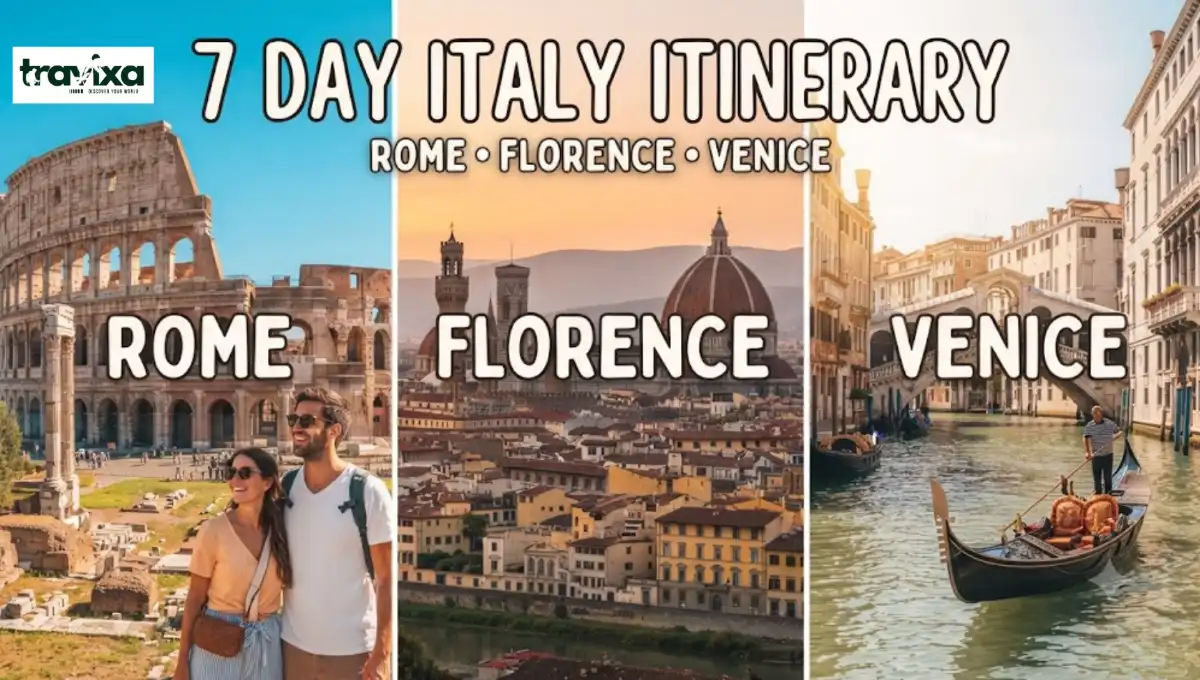
For a first-time trip, I recommend sticking to Rome, Florence, and Venice. You can also slip in a quick day trip to Tuscany while you are in Florence. This mix gives you history, art, great food, and some of the most iconic sights in the country.
Here is how you can map out your 7-day Italy trip, including where to go, what to look at, how to get between cities, and what it might cost.
Your 7 Day Italy Itinerary
| Day | Place | What to Do |
|---|---|---|
| Day 1 | Rome | Check out the Trevi Fountain, Pantheon, and Spanish Steps |
| Day 2 | Rome | Walk through the Colosseum and the Roman Forum |
| Day 3 | Vatican City & Florence | Visit the Vatican, then grab a high-speed train to Florence |
| Day 4 | Florence | See the Duomo, Michelangelo’s David, and Ponte Vecchio |
| Day 5 | Tuscany | Visit a small medieval town or tour the countryside |
| Day 6 | Venice | Walk around St. Mark’s Square and ride along the canals |
| Day 7 | Venice | Take a boat to Murano or Burano before heading home |
This plan has six hotel nights: two in Rome, three in Florence, and one in Venice. It is a packed week, but you will hit all the major highlights if you book your trains and attraction tickets ahead of time.
Read More Also – Best Time to Visit Italy in 2026
Day 1: Arrive in Rome and Explore
Rome is the best place to kick off your trip. It is packed with historic buildings, bustling old streets, and tons of cafés. You cannot see everything in a single day, so just focus on a few spots near the center.
Drop your bags at your hotel and take a quick breather. Once you are ready, head right back out.
Start at the Spanish Steps. From there, you can stroll over to the Trevi Fountain. It is super famous, and almost everyone tosses a coin into the water before they leave.
Next, walk to the Pantheon. It is an ancient Roman building with a massive open dome. You can also grab a seat at Piazza Navona to watch street performers and drink some coffee.
You can walk to all these places easily, so you do not need a tour guide for your first afternoon.
For dinner, find a local spot and try some classic Roman food. Cacio e pepe is a simple pasta made with cheese and black pepper, and carbonara is another great pick if you eat pork.
Don’t try to cram too much into day one. You will likely be tired from your flight, and you have a huge day of sightseeing coming up tomorrow.
Day 2: Visit the Colosseum and Roman Forum
Today is all about ancient history.
Head straight to the Colosseum in the morning. It was built nearly 2,000 years ago for gladiator fights and big public games. It looks huge from the outside, but going inside gives you a better feel for its history.
Right next door is the Roman Forum. You can walk right through the old ruins of temples and government buildings where ancient Romans used to hang out. Palatine Hill is right there too, offering cool views looking down over the ruins.
Plan to spend at least half the day on these spots. There is a lot of ground to cover on foot.
Later on, head over to Trastevere. It is a neighborhood with skinny streets, small shops, and tons of casual places to eat dinner. Just wander around without a map and pick a spot that looks good.
Tip: Book your Colosseum tickets online before you go. Time slots sell out fast, especially in the summer.
Day 3: Visit the Vatican and Travel to Florence
Start your morning early because you still have a lot to see before leaving Rome.
Vatican City is an independent country sitting right inside Rome. It is home to St. Peter’s Basilica and the massive Vatican Museums.
The museums hold years of art and sculptures. The biggest draw is the Sistine Chapel, famous for the painted ceiling done by Michelangelo.
St. Peter’s Basilica is huge and free to enter, though lines can be long. Just make sure to wear clothes that cover your shoulders and knees, or they won’t let you in.
In the afternoon, grab your bags and head to Roma Termini station. Hop on a high-speed train to Florence. The ride takes about an hour and a half.
Once you get to Florence, check into your hotel, grab dinner nearby, and get some rest.
Read More Also – Italy Trip Cost from India 2026
Day 4: Spend a Day in Florence
Florence is smaller than Rome, but it is packed with Renaissance art and incredible architecture.
Start your morning at the Accademia Gallery to see the real statue of David by Michelangelo. Book this ticket early so you don’t get stuck standing in a massive line.
Next, walk over to the Florence Cathedral, known as the Duomo. Its giant dome dominates the city skyline.
Grab some lunch in the side streets, then walk past Piazza della Signoria to the Ponte Vecchio. This is an old bridge crossing the Arno River with tiny jewelry shops built right onto it.
If you love art, you can also check out the Uffizi Gallery. Just pick one museum so you don’t burn out.
In the evening, walk up to Piazzale Michelangelo for sunset. It gives you the best panoramic view over the whole city. Grab some gelato on your way back down.
Day 5: Take a Day Trip to Tuscany
You don’t have to stay inside Florence all day. Use today to check out the wider Tuscan region. You can take a train or join a short bus tour. Here are three good options:
- San Gimignano: A tiny medieval hill town famous for its tall stone towers. It feels like stepping back in time.
- Chianti Countryside: Perfect if you want to see rolling hills, olive groves, and vineyards. Many tours here include wine tastings.
- Pisa: Famous for its Leaning Tower. You can take a quick train from Florence, see the tower and cathedral in a couple of hours, and head back.
Pick just one of these places so you aren’t spending your whole day sitting in a car or bus. Head back to Florence for the night.
Day 6: Travel to Venice
Catch a morning train from Florence to Venice. The direct high-speed train takes about two hours and drops you off right at Venezia Santa Lucia station, near the water.
Venice is totally different from any other city because there are no cars or roads. Everyone gets around by walking or taking boats.
After dropping your bags off, head straight to St. Mark’s Square. It is the main hub, featuring a gorgeous cathedral and the giant Doge’s Palace.
Next, walk over to the Rialto Bridge to watch the boats cruise down the Grand Canal.
After that, just get lost in the back alleys. You will find tiny bridges, quiet canals, and small bakeries around every corner. If you want a gondola ride, ask about the price before hopping in because they can be pricey. Otherwise, take the cheap public water bus (the vaporetto) to see the sights from the water.
Day 7: Visit Murano or Burano Before Leaving
If your travel plans allow, take a morning boat ride out to one of the nearby lagoon islands.
- Murano: Famous for glassblowing. You can watch local artists shape hot glass into art.
- Burano: Famous for bright, rainbow-colored houses sitting right along the canals. It is one of the most photogenic spots in Italy.
Pick one island, or skip them entirely if you have an early flight or train.
Tip: Try to book an open-jaw flight (fly into Rome and fly out of Venice). It saves you from having to take a long train ride all the way back down the boot just to catch your flight home.
Read More Also – 2 Week Europe Itinerary
How Much Does a 7-Day Italy Trip Cost?
Prices change based on the season and where you stay, but here is a rough estimate per person for the week (not counting international flights):
| Expense | Budget Trip | Mid-Range Trip |
|---|---|---|
| Hotel (per night) | EUR 50–90 | EUR 100–180 |
| Food (per day) | EUR 20–35 | EUR 40–70 |
| Local Transport | EUR 35–100 | EUR 70–150 |
| Intercity Trains | EUR 40–100 | EUR 70–150 |
| Attractions | EUR 60–120 | EUR 120–220 |
Quick Money-Saving Tips
- Book your train tickets months in advance when cheap fares drop.
- Stay slightly away from the main tourist squares to find cheaper hotels.
- Eat bakery items or grab espresso standing up at a bar counter instead of sitting down at a tourist trap café.
- Walk everywhere instead of taking taxis.
When to Visit
- Spring (April to May) & Autumn (September to October): Best times to go. The weather is nice for walking, though cities are still quite busy.
- Summer (June to August): Very hot, crowded, and expensive.
- Winter (November to March): Cold and rainy, but attractions have zero lines.
Useful Travel Tips
- Visas: If you are traveling on an Indian passport, you will need to apply for a Schengen visa through VFS Global well ahead of your trip. Make sure you have your hotel bookings, return flights, and travel insurance ready. VisaHacks+ 1
- Shoes: Bring comfortable walking shoes. You will walk miles every day, and Venice has hundreds of steps on its bridges.
- Luggage: Pack light. Dragging a massive suitcase over old cobblestones and up train stairs is no fun.
FAQs About a 7 Day Italy Itinerary
1. Which places should I visit in Italy in seven days?
For a first trip, Rome, Florence, and Venice are good choices. You can explore ancient landmarks in Rome, see famous art in Florence, and enjoy the canals in Venice. If time allows, take a day trip to Tuscany.
2. How much money do I need for seven days in Italy?
A rough budget is €600–€1,100 per person for a budget trip or €1,000–€1,800 for a mid-range trip, excluding international flights. Your actual costs will depend on hotel prices, food, transport, and activities.
3. Is Italy expensive for tourists?
Italy can be expensive in popular cities, especially if you stay in the centre or travel during summer. You can reduce costs by booking early, using trains, walking, and eating at local restaurants.
4. Can I visit Rome, Florence, and Venice in one week?
Yes. These cities are connected by train, so travelling between them is fairly easy. You will need to keep your sightseeing plans realistic because you only have a few days in each place.
5. Should I rent a car for a 7 day Italy itinerary?
No, not for this particular route. Trains are more convenient for travelling between Rome, Florence, and Venice. A car is more useful if you want to explore rural areas that are difficult to reach by public transport.
Read More Also – 10 Day Europe Itinerary